Collect sensitive client documents against the right matter.
Give clients a controlled legal document intake path for IDs, proof of address, source of funds documents, contracts, medical records, and supporting evidence.

01
One controlled intake record tied to the client, matter, or legal workflow.
4
Core stages: request, submit, review, and complete.
0
Client passports and bank statements need to rely on forwarded attachments.
Client document intake breaks down when matter context lives in email.
A single matter may require identity documents, proof of address, source of funds records, contracts, board minutes, corporate filings, medical records, witness evidence, or privileged material.
When law firm document requests run through email, the purpose may sit in one thread, the attachment in another, and the review decision in a separate internal exchange.
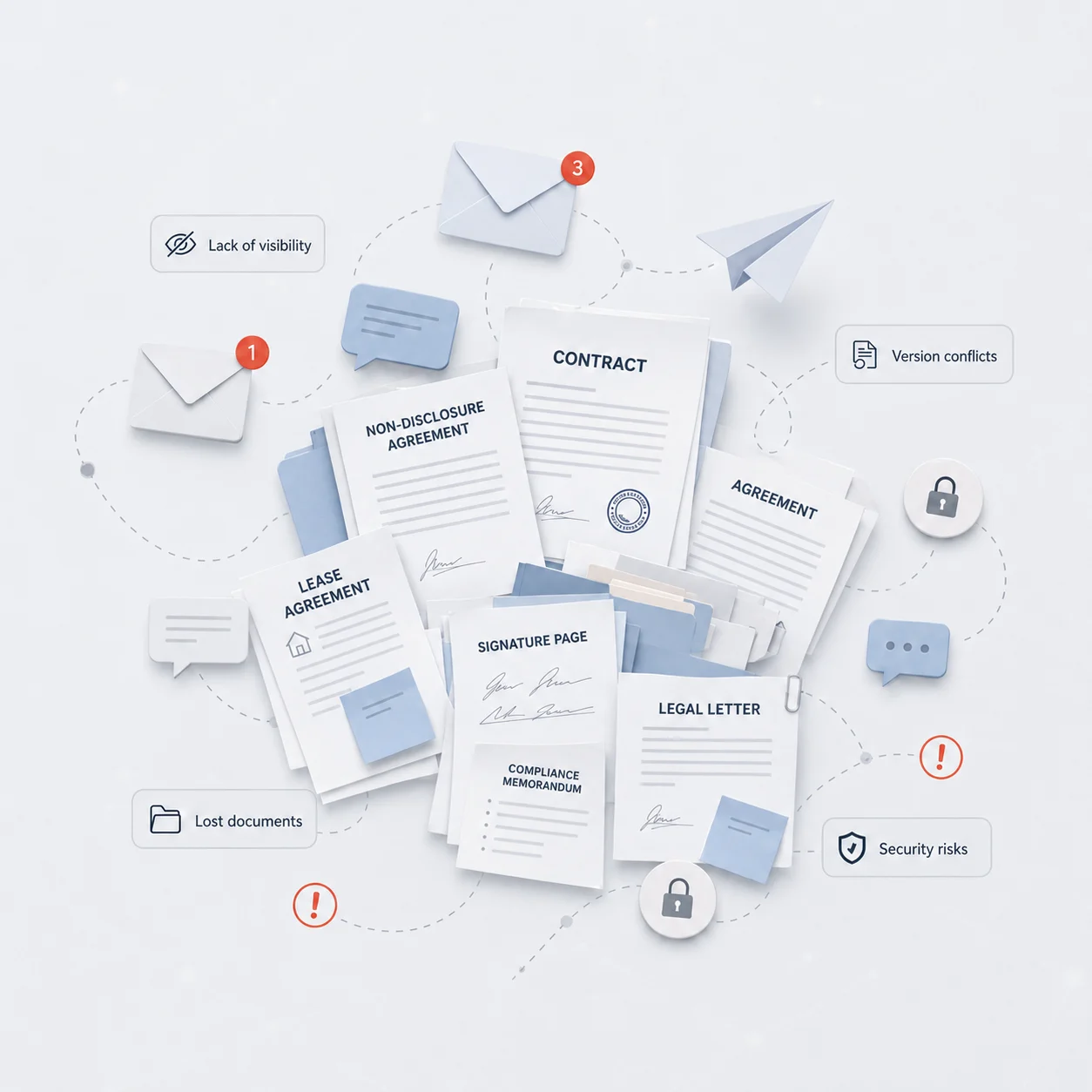
Legal document collection needs control at the level of each matter.
Creates forwardable attachments and makes document-level access difficult to prove.
Accept files but may not capture matter context, document status, or reviewer decisions.
Centralize records after collection but often inherit broad permissions and weak matter context.
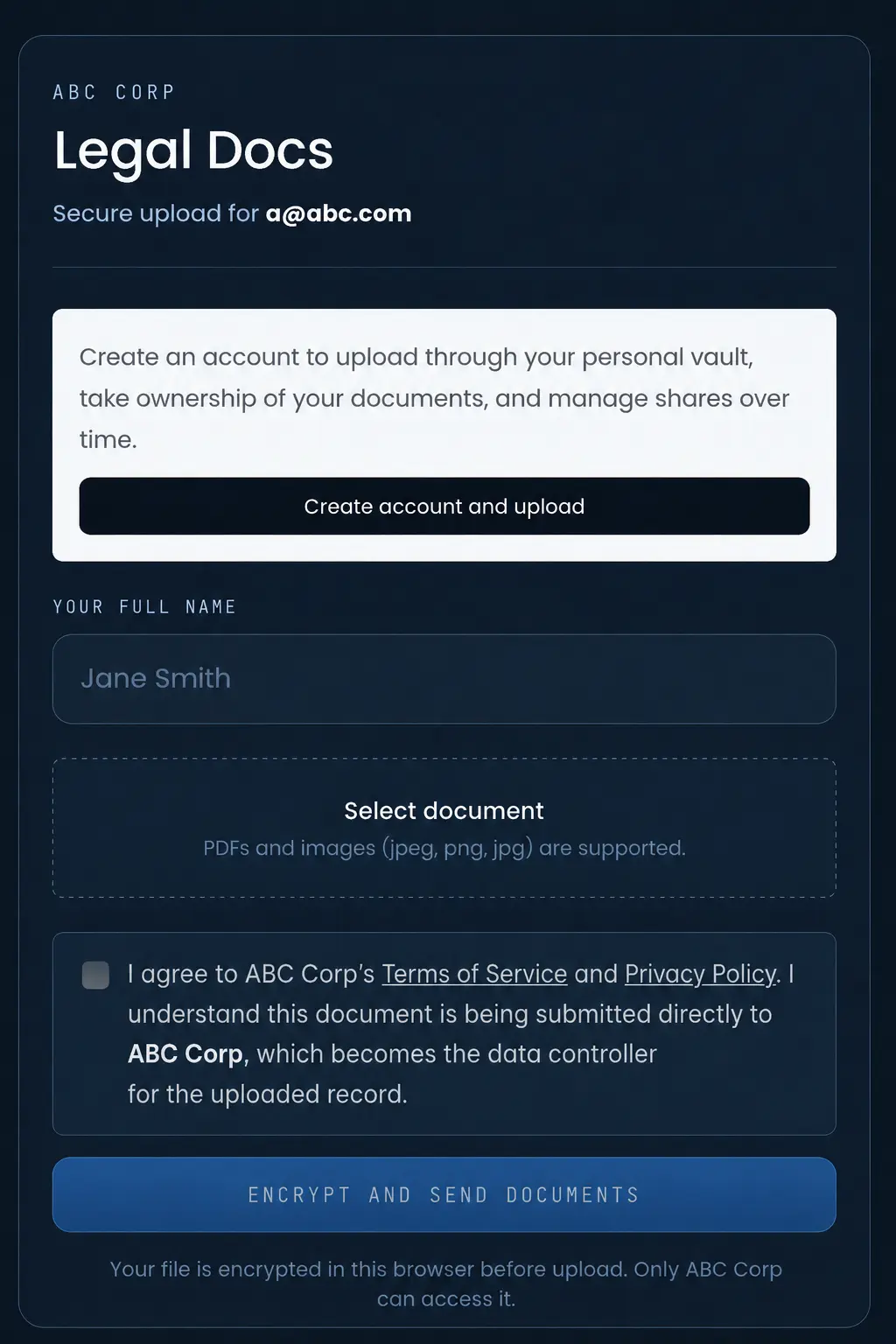
Matter-based client document intake from request to review.
Issue a document request tied to the client, matter, or compliance purpose.
Let the client upload through a governed portal instead of attaching records to email.
Give fee earners, paralegals, or compliance reviewers one intake record to work from.
Apply access controls, audit logging, and retention rules around the document lifecycle.
Confidentiality and matter control that do not depend on mailbox history.
Audit trail
Record submission, access, review, and lifecycle events for sensitive matter documents.
Scoped access
Restrict AML, privileged, medical, financial, or evidential records to the right roles.
Document refresh
Request corrected or updated evidence without creating duplicate thread history.
Client confidence
Give clients a controlled route for records that deserve more care than email attachments.
CVOR Data Room
When a matter involves more than your client.
Corporate work, disputes and property transactions pull in counsel on the other side, counterparties, advisers and experts who each need a different part of the same matter file. CVOR Data Room scopes a room to the matter, and the firm decides party by party what each of them can reach.
Parties
Opposing counsel and your own client in one room
Each side is admitted separately and sees only what the firm has released to it. Material submitted by one party is not visible to another unless the firm shares it.
Exchange
Request evidence and release bundles from the same place
Requests go out as named items with their own status, and anything released back to a party carries the same access boundary as the rest of the matter.
Accountability
Know which firm opened which document
Material released from a room can carry recipient watermarking, so a bundle that travels beyond its intended reader stays traceable to the party it was issued to.
Designed to support confidentiality, AML, and inspection-ready handling.
Legal teams may need to consider UK GDPR obligations, professional duties, legal professional privilege, confidentiality, AML obligations, and inspection readiness.
CVOR does not decide legal obligations or retention periods. It provides governed collection and custody so the firm's own policies and matter controls can be carried out with stronger auditability.
Legal document intake questions
Is CVOR a replacement for a case management system?
No. CVOR governs sensitive document collection and custody. It can support legal intake workflows alongside matter management systems.
What legal documents can clients submit through CVOR?
Firms can request IDs, proof of address, source of funds documents, contracts, corporate records, medical files, witness evidence, and other matter-specific documents.
How does CVOR support law firm document requests?
Each request is tied to a defined client, matter, or compliance purpose, with submission status, controlled access, review activity, and retention recorded around it.
Can CVOR be used as a data room for a transaction or dispute?
Yes. CVOR Data Room scopes a room to the matter and admits each party separately, so opposing counsel, counterparties, advisers and your own client can be given different access to the same file. Documents are requested from participants and released back to them under the same access and review controls.
Move client document intake into governed custody.
Sales-led onboarding. We assess document types, reviewer roles, access boundaries, and retention requirements before onboarding.